About
Timeline
01/15/2024-04/10/2024
My Role
UX Designer, UX Researcher
My Team
1 UX Designer, 1 UX Researcher, 1 Stakeholder
Deliverables
Explore innovative diagnostic approaches by integrating AI analysis while preserving human medical judgment.
Transform medical image viewing through 3D holographic visualization and interactive gallery interfaces.
Streamline medical professional collaboration through an integrated communication platform.
Problem we try to solve
Medical professionals lack efficient tools for viewing, analyzing, and collaborating on medical images, leading to delayed diagnoses and prolonged patient waiting times.
Our solution
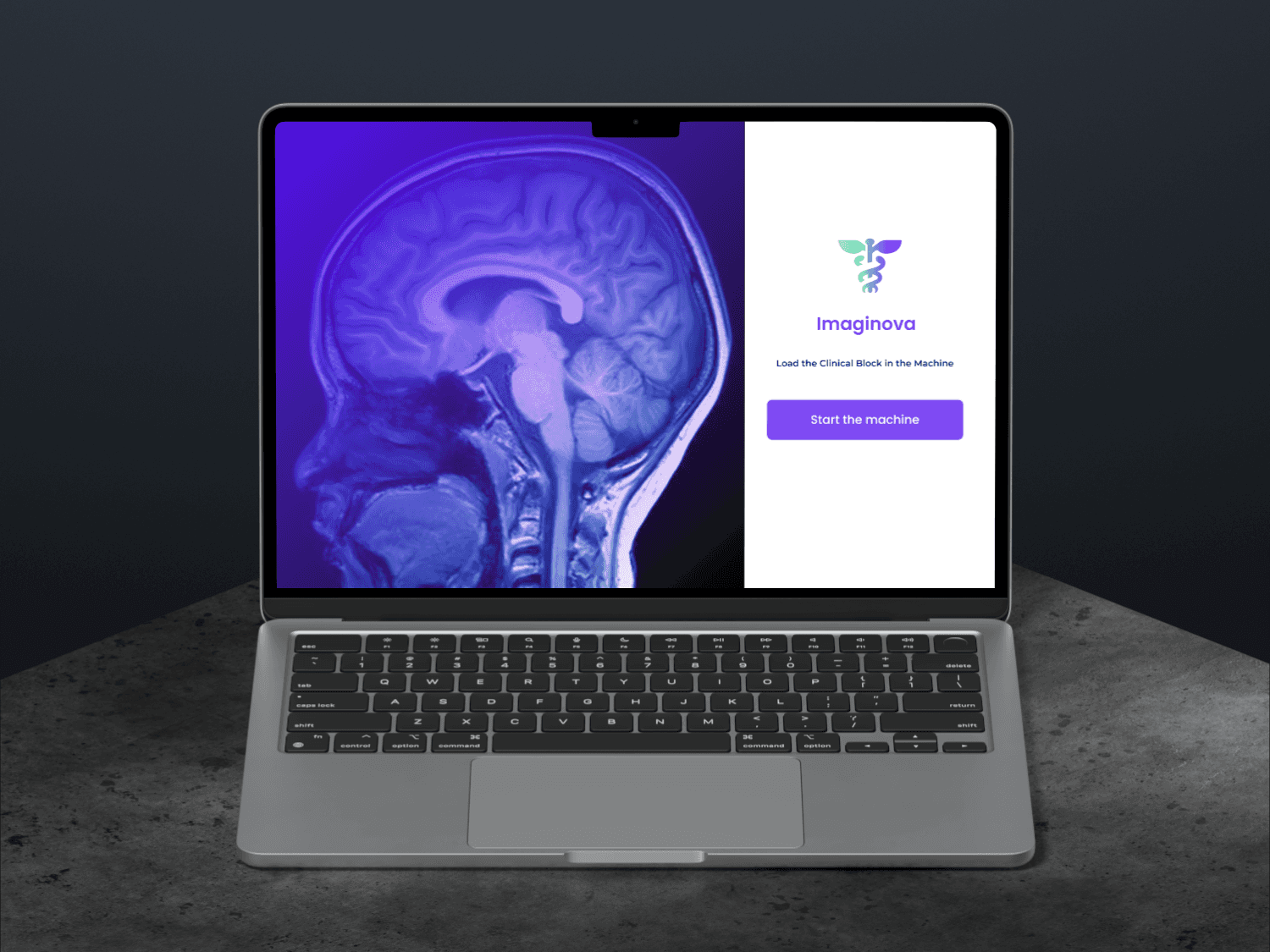
An integrated medical imaging platform that combines AI-assisted diagnosis, 3D holographic visualization, and streamlined professional collaboration tools to accelerate and improve the accuracy of medical image analysis.
Target users
Primary users of Imaginova are radiologists and surgeons, with other medical professionals as secondary users who need to review and discuss medical imaging results.

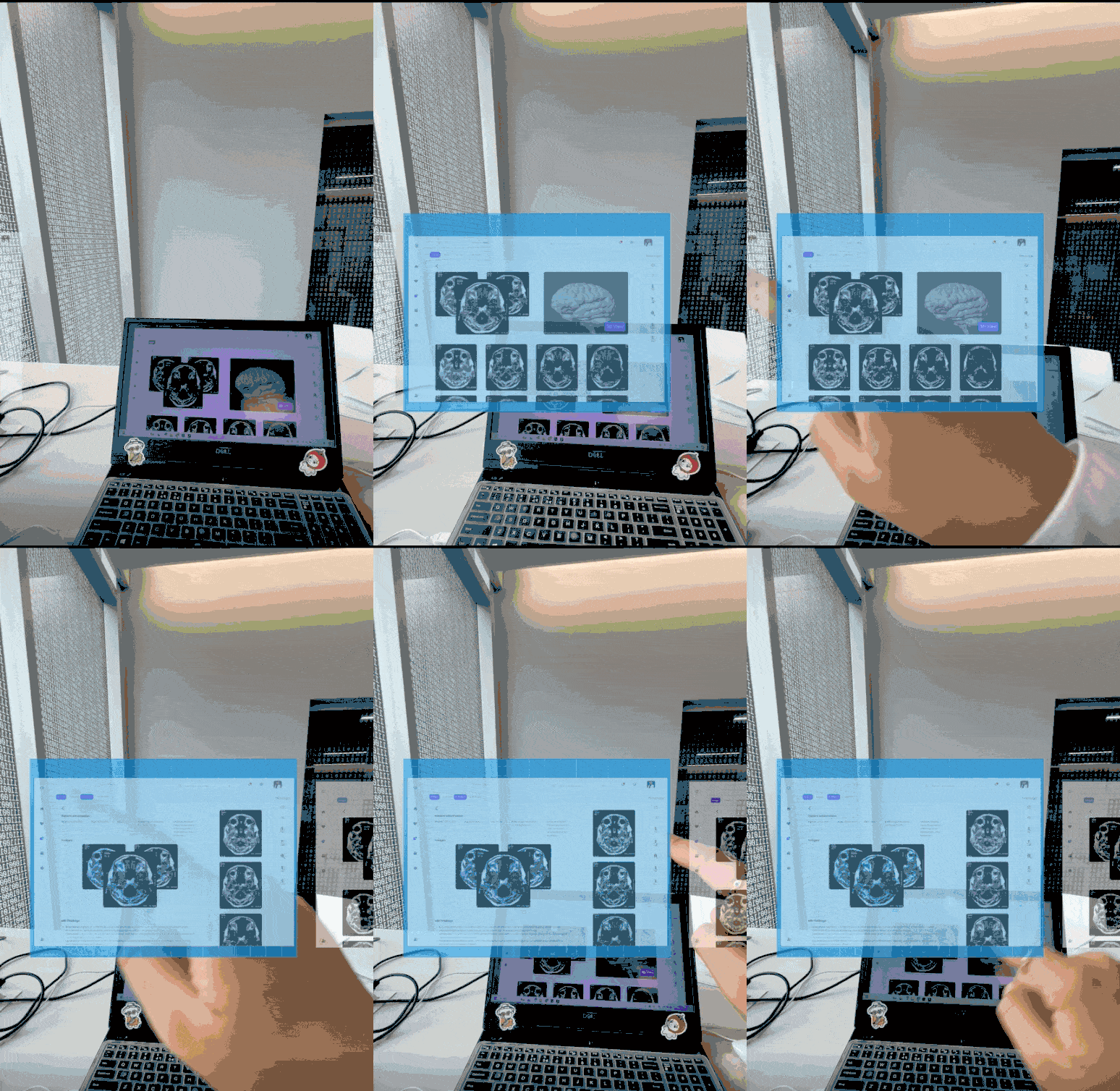
Prototype Overview
Log in

Go to task

AI analysis
Holographic View
Chapter 1.
When Darkness Fell: The Day My World Went Black

It was an ordinary November morning in 2023 when my world suddenly went dark. One moment I was going about my day, and the next, my left eye could barely perceive anything beyond a faint glimmer of light.
“ How does one process such a sudden, terrifying change?”
little did I know this frightening experience would later become the catalyst for innovation.…
Chapter 2.
48 hours: A race against time
The next 48 hours were a whirlwind of emotions and revelations.
First, a visit to the university health center, then an urgent referral to the University of Rochester's premier vision center. The diagnosis was shocking: 85% vision loss.
RIT health center
URMC hospital
85% vision loss
Emergency room
MRI discovery
20+ Doctors.
Countless tests.
One long night of uncertainty.
Chapter 3.
Through the eyes of both worlds

Patient

Medical professionals

How I get there ?
By conducting in-depth interviews with radiologists who work with these challenges daily. I sat down with two experienced radiologists, letting them guide me through their workflow, their challenges, and their hopes for the future.
Demographic
1. Name, 2. job title, 3. age, 4. technology level
General user behavior
1. What type of software are you currently using for viewing medical images?
2. What are the purposes of you using this platform? (eg: view medical images, document patient medical history, communicate with other doctors)
3. Describe your latest experience of using this software. (tell me in a story format, what/who/why/where)
4. How do you feel about using this platform?
5. What are you satisfied with this platform?
6. Is there anything about this platform that you think could be improved?
7. Is there anything that you want but could not find on this platform?
My project-related questions
I'm designing a digital platform that can use AI to read medical images, provide potential results, and provide potential treatment plus its outcome. This platform can also enable medical professionals to view medical images holographic projection view. This platform will be super innovative and may change the way of the medical field. So I’m going to ask you a few questions about designing this platform.
1. How comfortable are you with the use of AI to suggest potential diagnoses and treatments from medical images? What are your primary concerns about this technology?
2. How useful do you think a holographic projection(view medical image in three dimensions if needed) of medical images would be in your work? Can you describe a scenario where it might enhance your ability to diagnose or treat patients?
3. In terms of AI suggestions for diagnosis and treatment, what level of accuracy and reliability would you require to trust and use these recommendations in your practice?
Interview insights
Enhanced visualization
Efficient communication
AI support
Lesion localization
Speed with precision
Strategic focus
Organ visualization
Accurate diagnosis
Anatomical database
Report generation
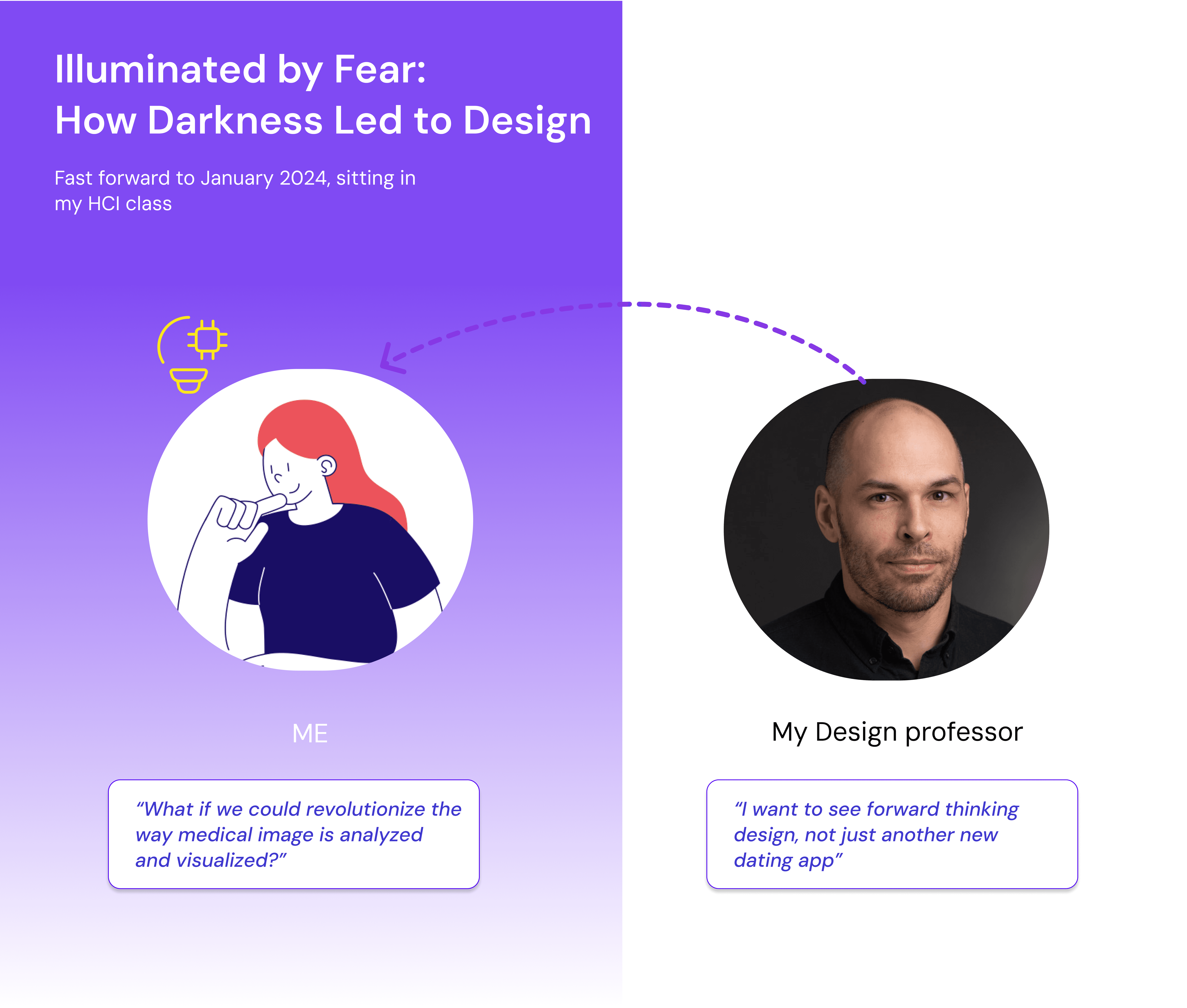
From Requirements to Architecture: Structuring the Solution
Having gathered deep insights from radiologists, I faced the challenge of transforming complex requirements into a coherent product structure.
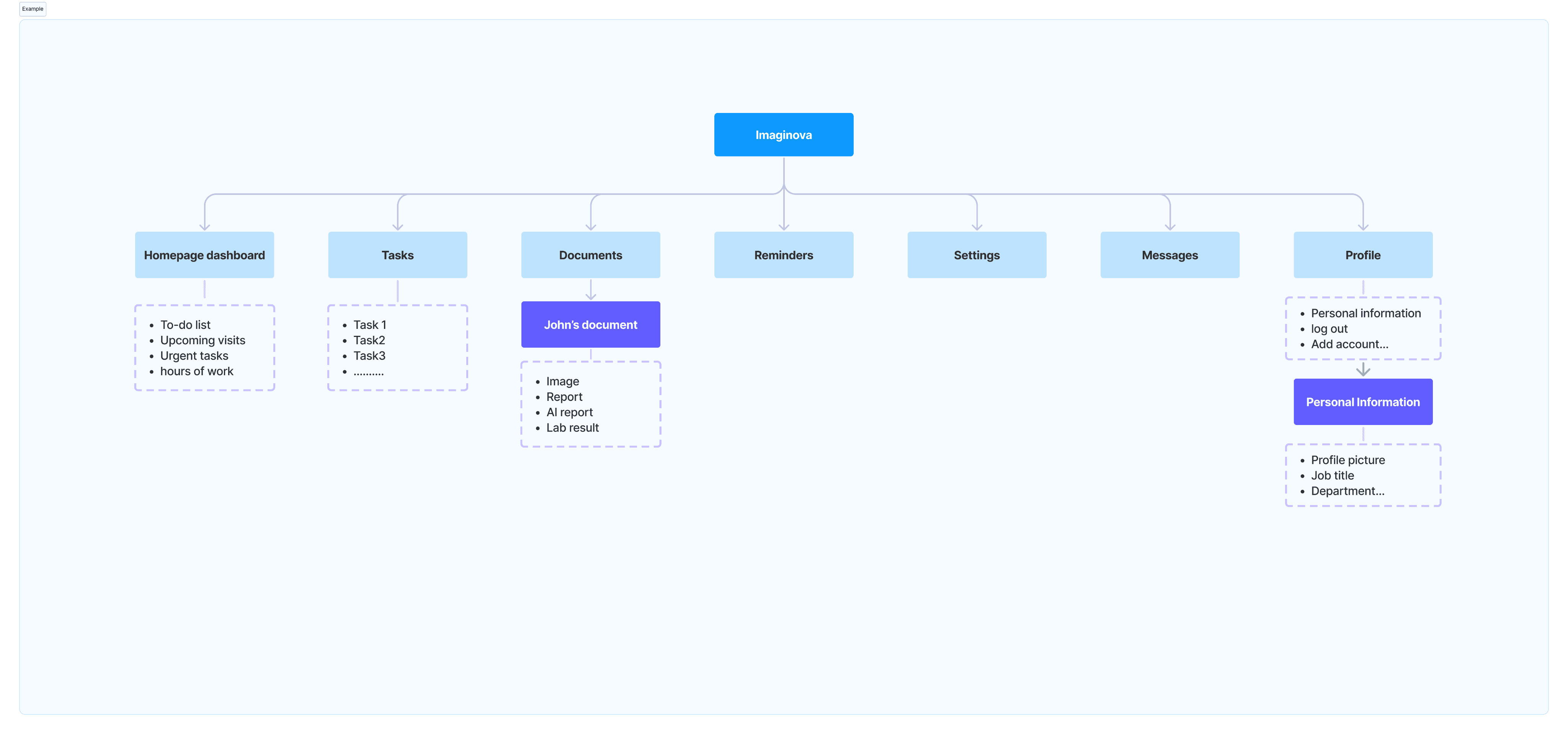
Given the depth of medical imaging workflows, I strategically began with Information Architecture (IA) to create a clear foundation before detailed design. This approach allowed me to visualize the entire ecosystem, identify potential navigation issues early, and ensure every feature would find its logical place in the radiologists' workflow.
Based on the information architecture, I created 4 wireframes.
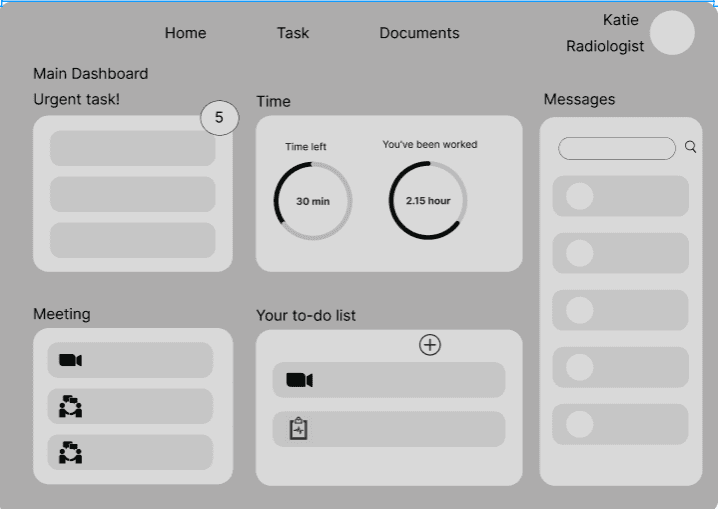
Dashboard
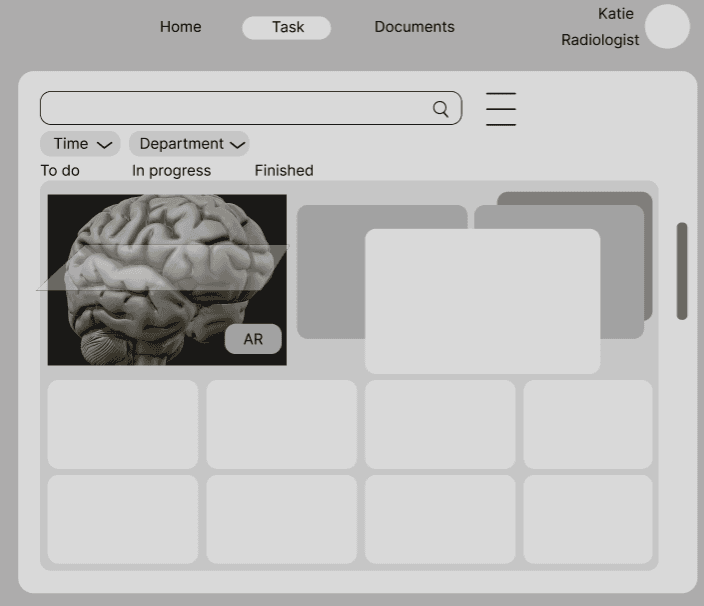
Image slices
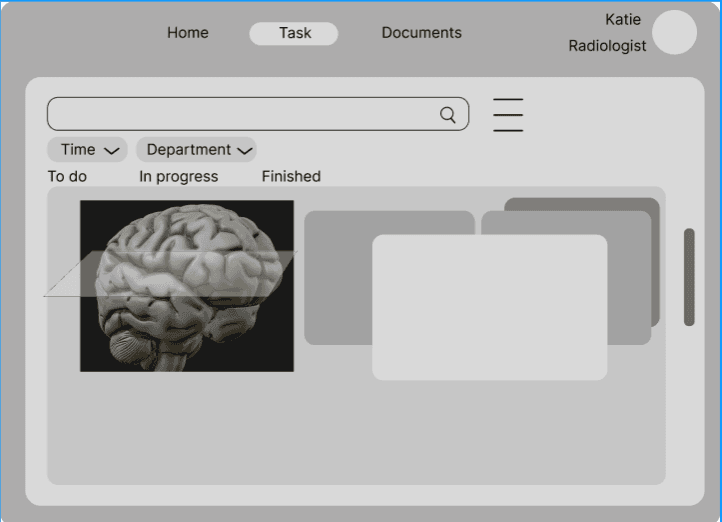
Images
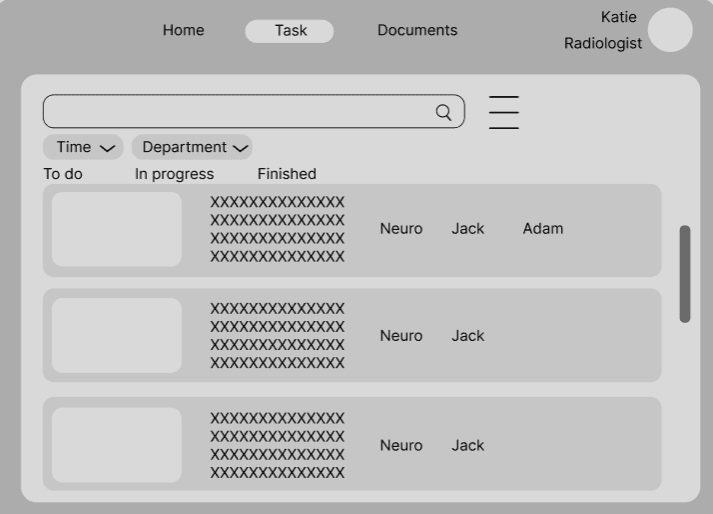
To-do tasks
Chapter 4.
Design decisions
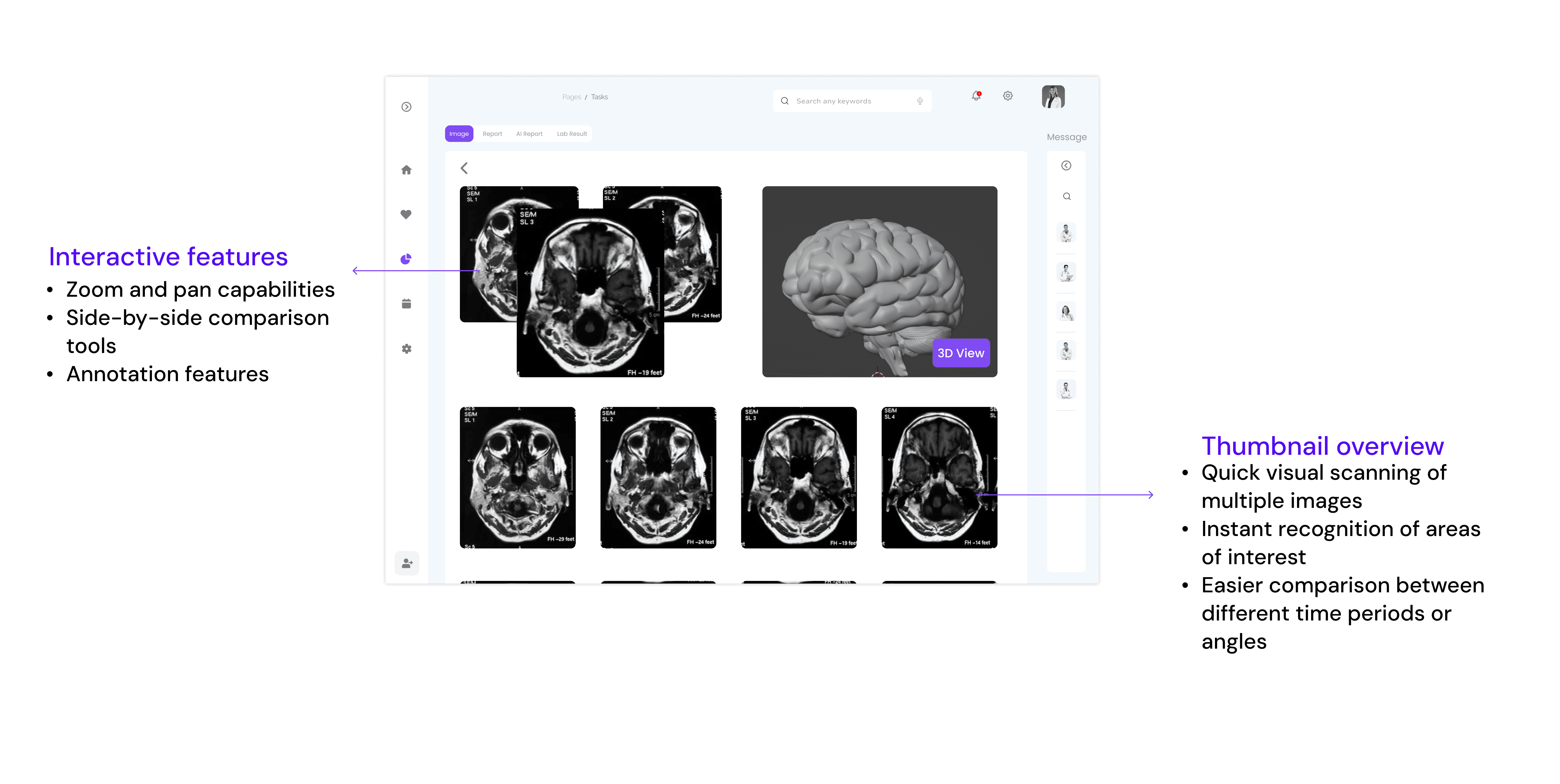
Design decision.1 Reimagining image interaction
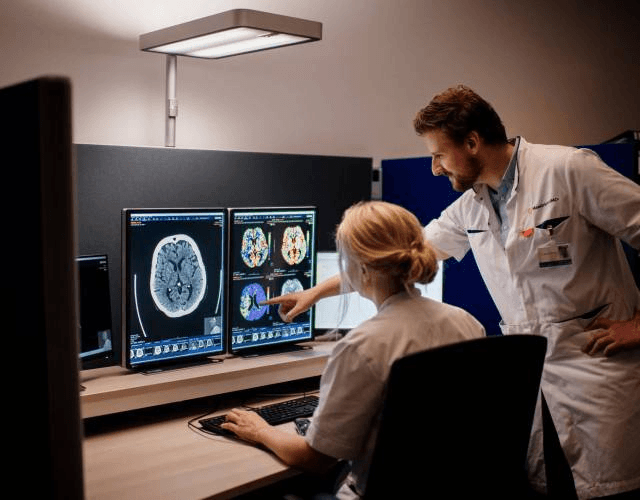
My observation of traditional way of viewing medical images

Passive scrolling
One by one viewing
Limited interaction

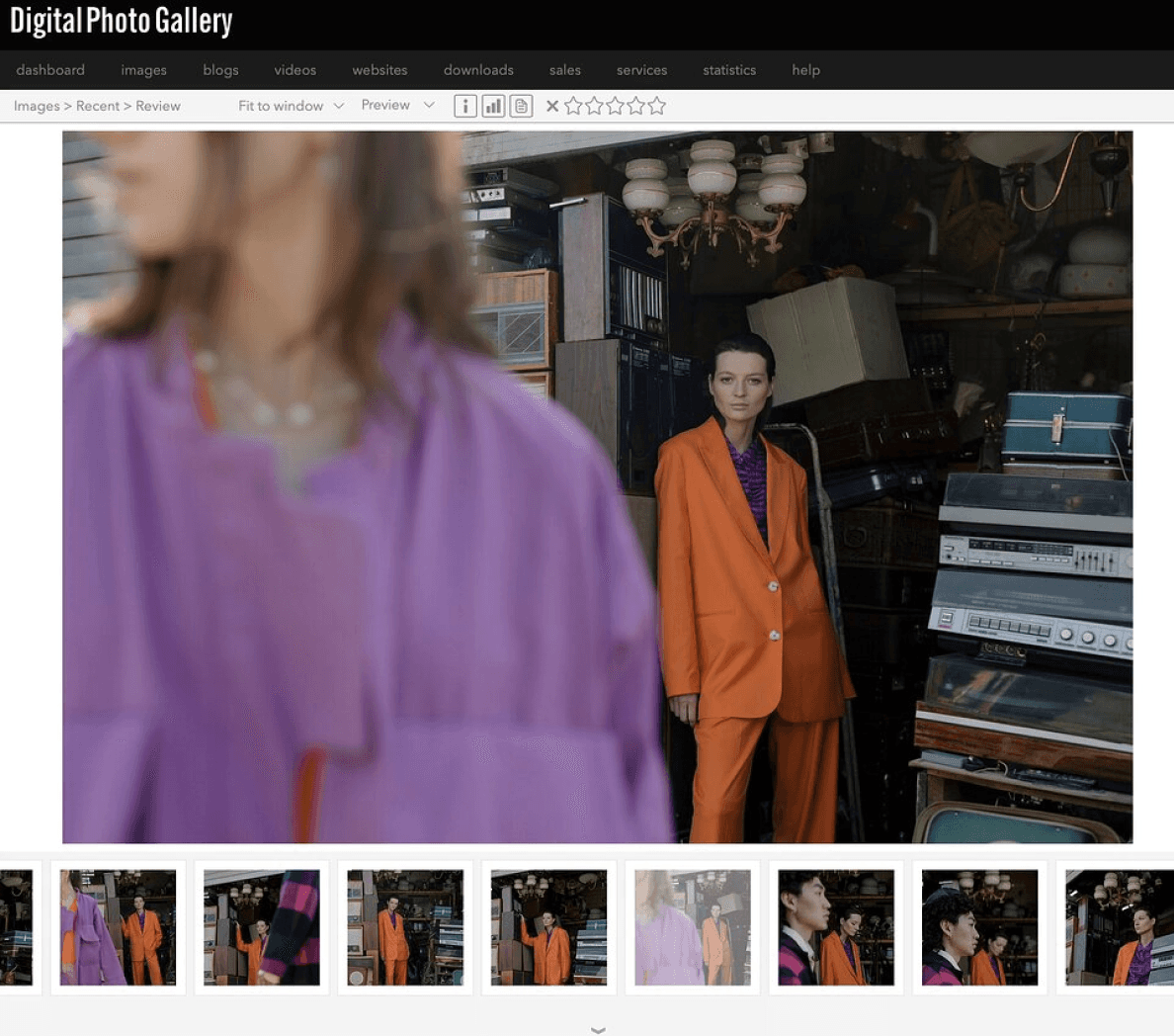
"What if we treat medical images like simple digital images? And we could make them into a photo gallery.
Design decision.2 The Vertical Space Challenge
Initial Design
Our first major design pivot came from a crucial piece of feedback about the navigation bar placement. The initial wireframes placed the navigation bar at the top of the screen - a common practice in web design. However, our users quickly pointed out two critical issues:
1. Limited vertical place
"Every millimeter of vertical space counts for medical images," explained a radiologist during testing. Our top navigation was taking away crucial space needed for examining MRIs and CT scans.
2.Against convention
Plus, as another user pointed out, "With PACS systems always using side navigation, you don't want to fight muscle memory when making quick decisions."

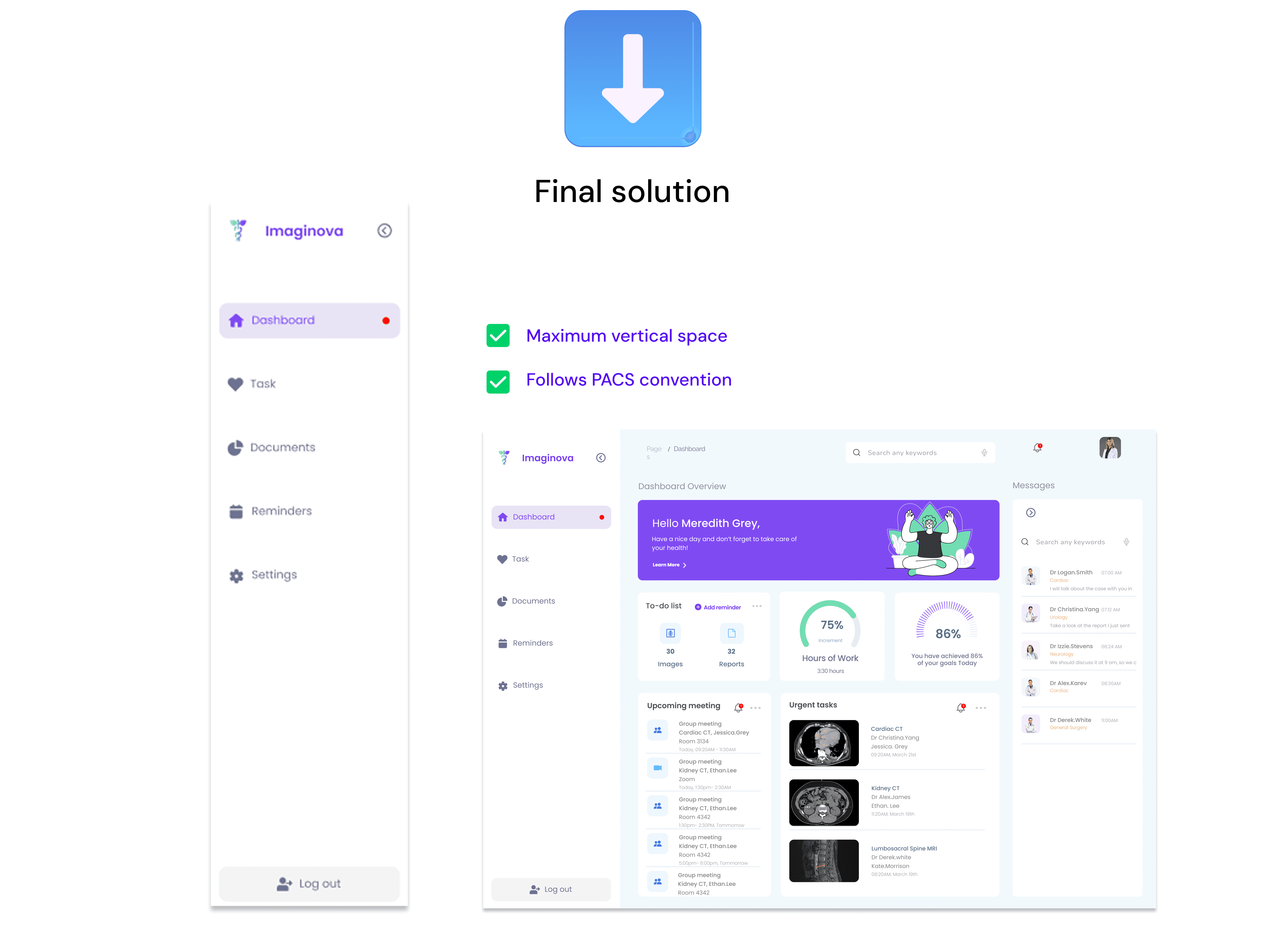
“When you are making split-second decisions about patient care, you don’t want to be fighting against muscle memory.”
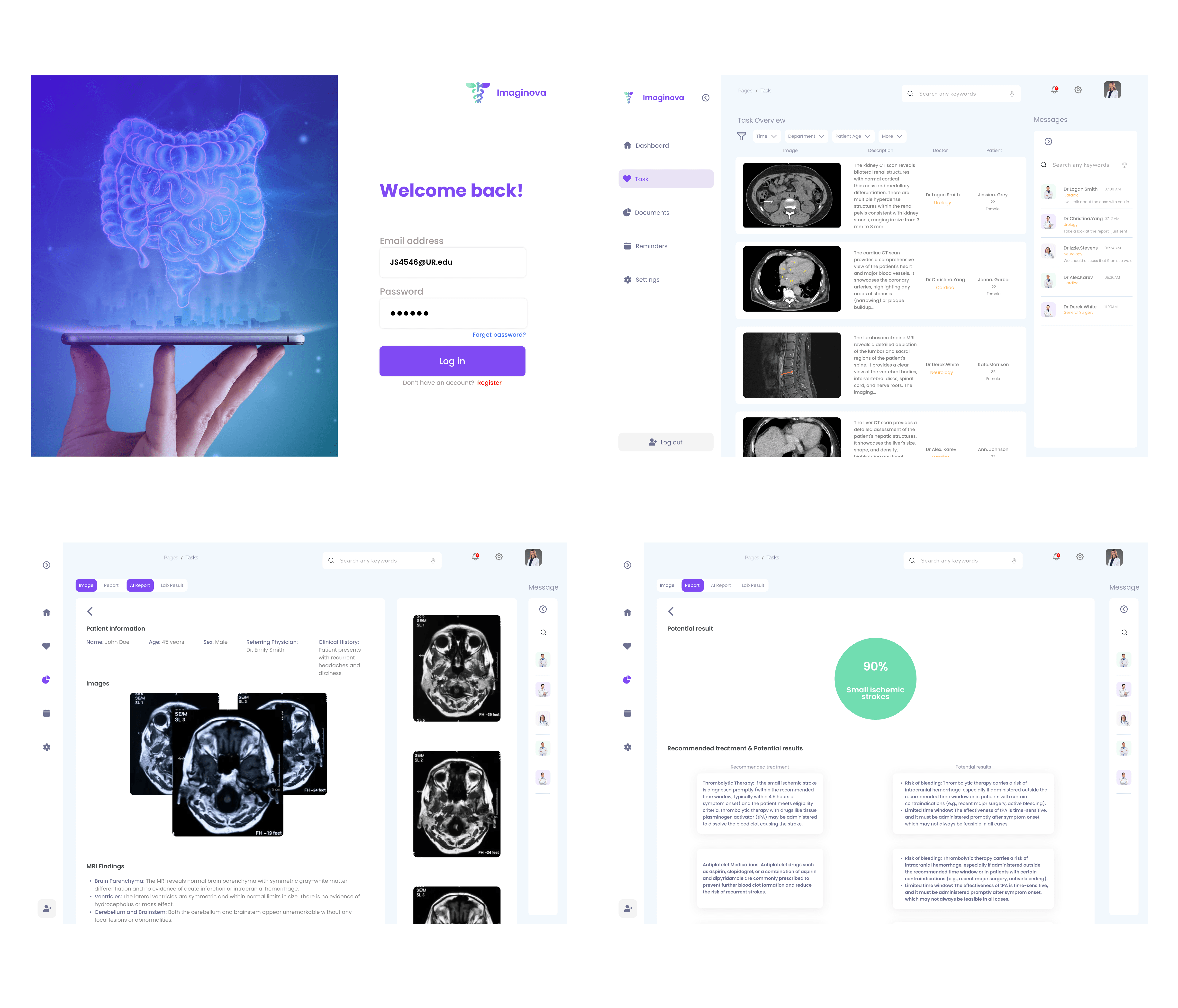
Other prototypes
Reflection
The future of medical imaging
Imaginova isn't just a solution to a problem - it's a bridge between current limitations and future possibilities. Could this be the future of medical imaging? A future where patients don't have to endure the agonizing wait I experienced, where doctors have better tools at their disposal, and where technology enhances rather than replaces human expertise?
Current limitations

Future possibilities
This story isn't just about creating a new medical imaging platform - it's about transforming a personal trauma into a solution that could help countless others. And perhaps that's the most powerful aspect of design: its ability to turn our darkest moments into beacons of hope for others.
Personal journey
Transforming a personal challenge into a universal solution
Future vision